











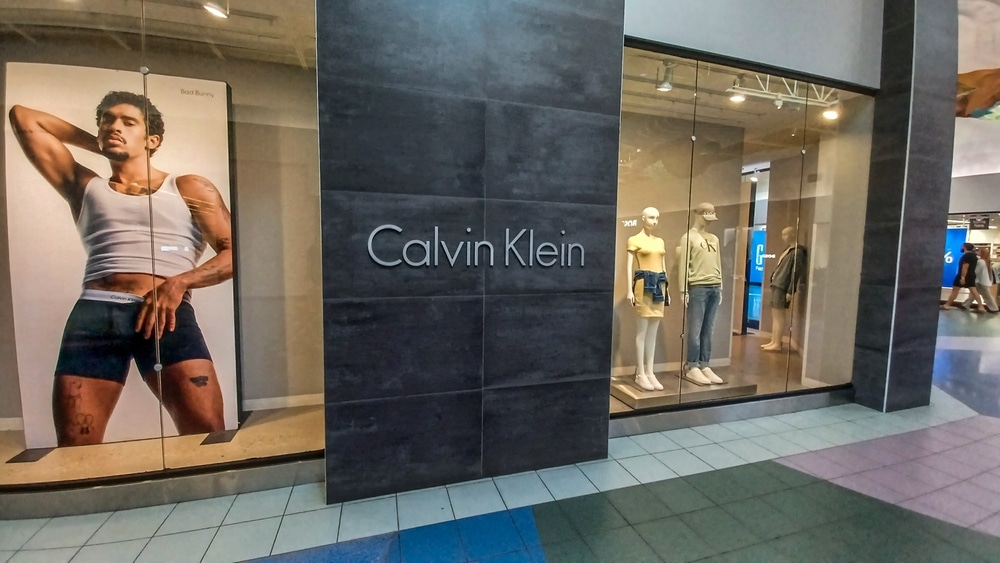
NEW YORK — The modern incarnation of Calvin Klein is known for three main elements: underwear, denim, and effective marketing.
The revival of its higher-end Calvin Klein Collection line, which closed in 2017 to concentrate on the former two categories, has primarily served as a marketing exercise. Since creative director Veronica Leoni took the helm last year, Calvin Klein has successfully re-established itself in fashion discussions, becoming a must-see event at New York Fashion Week. Last season garnered 75 percent of the online conversation share for the entire event, as reported by Launchmetrics, largely thanks to an impressive lineup of celebrity attendees.
This season promises to amplify that presence. The front row showcased a who’s who of stars from popular television shows, including Francois Arnaud from “Heated Rivalry,” Britt Lower of “Severance,” Louisa Jacobson from “The Gilded Age,” Myha’la from “Industry,” and recent campaign favorites Grace Van Patten and Jackson White, who portray tumultuous lovers on “Tell Me Lies” and are also a couple off-screen. Big name film stars like Dakota Johnson, Lily Collins, and notably Brooke Shields—known for one of Calvin Klein’s most iconic campaigns—were also present.
Aligning with beloved TV personalities offers a strategic advantage, allowing brands to secure a place in popular culture. Calvin Klein excels in this area: its 2024 campaign featuring Jeremy Allen White from “The Bear” created significant buzz. However, converting that hype into tangible sales remains a different challenge.
It’s still too early to assess whether Leoni’s vision translates into sales. Her debut collection was presented last February and only reached stores last autumn; PVH has yet to announce fourth-quarter earnings. While sales grew by 3 percent in the third quarter of 2025—surpassing analyst expectations—it’s not enough to indicate significant momentum. Critics have responded with cautious optimism.
Leoni’s approach has always drawn from the brand’s classic minimalism. Each season, she pushes the boundaries of that aesthetic: for Spring 2026, she introduced playful elements such as fringed dresses and brighter shades of pink and green.
In her latest collection, she took inspiration from Calvin Klein’s early days in the 1970s and 1980s, when the brand made waves with provocative marketing. One standout piece featured a dress with a sweetheart neckline that artfully revealed a nude square of fabric—so subtle that it required a second glance to realize it was artistically crafted to reflect a bare breast. Other highlights included underwear layered over leggings, accentuating the brand’s iconic underwear bands, now marked with the term “Collection.”
“There was a compelling hedonistic elegance and vigor emanating from another era,” Leoni commented post-show. “The essence of the body cult was evident, and we aimed to amplify that within the collection.”
In addition to showcasing those bands, there were also strategic nods to the brand’s successful denim market—one ensemble featured a Canadian tuxedo with jeans that were a reissue of the first pair showcased on the runway back in 1976, unearthed from the archives.
“We cannot exist without the underwear and denim,” she stated. “We sought to celebrate the 50th anniversary as a genuine link to the brand.” The most visible denim ensemble appeared on Van Patten and White, who were styled in coordinated denim jackets and trousers.
It raises the question of whether, to adequately position the collection for commercial success, there should be a stronger connection to the products that consumers recognize and love. The overall presentation leaned heavily into tailored suits, dresses, and coats in muted tones of gray, white, brown, and black. There was a splash of color with striking pieces like a translucent red leather trench coat, a burgundy leather set, and a vivid orange gown that gracefully swept the runway.
The brand’s next challenge revolves around broadening the reach of Collection; ideally, it should be accessible to more consumers. Recently, a 3,000-square-foot flagship opened in Manhattan’s Soho, though it currently focuses on mass-market offerings, particularly denim and underwear. While the brand intends to gradually introduce key collection pieces this spring, those plans are currently on hold. Products are available online through the brand’s website, Net-a-Porter, and MyTheresa.
Effective marketing will play a key role in addressing this challenge. Calvin Klein has showcased its celebrity affiliations on the red carpet, designing a custom gown for Emmy winner Lower last fall. Kristen Stewart made headlines when she donned the brand’s long underwear at the IndieWire Honors Winter Film Awards last year. (Additionally, Apple Martin’s appearance in her mother Gwyneth Paltrow’s Calvin Klein halter dress at the “Marty Supreme” premiere was a happy coincidence that resulted in significant attention.)
The brand’s marketing prowess remains formidable; recent campaign stars include Super Bowl halftime performer Bad Bunny and Vogue cover model Rosalía.
While the recent collection draws its inspiration from the 1970s and 1980s, another important era of the brand is resurfacing: Ryan Murphy’s series “Love Story,” depicting the ill-fated romance between John F. Kennedy Jr. and Carolyn Bessette Kennedy, who worked for Calvin Klein as a publicist in the 1990s, premiered on Hulu recently. Initial images caused quite the stir on social media, ensuring that the series’ wardrobe will attract significant attention online during its run.
It’s noteworthy that, despite the star-studded front row, Calvin Klein missed an opportunity for a pivotal moment: Sarah Pidgeon, who portrays Bessette in the series, was notably absent.