












Ba&sh ignited excitement within the fashion community by showcasing its handbag collection across bus shelters, Paris Métro exits, and popular magazines this past September with the debut of its Youyou model. This category is surging within the French premium fashion sector, steadily gaining momentum year after year. With a background at prestigious brands like Louis Vuitton and Marc Jacobs, along with most recently, Chloé, Hélène D’Auriac is now steering the burgeoning accessories line for the brand co-founded by Barbara Boccara and Sharon Krief in 2003. In a conversation with FashionNetwork.com, she shares insights on navigating this competitive market and her strategy for expanding Ba&sh’s accessory offerings.
FashionNetwork.com: The Youyou bag launched in September with a prominent campaign featuring Abby Champion, showcased on the Galeries Lafayette façade.
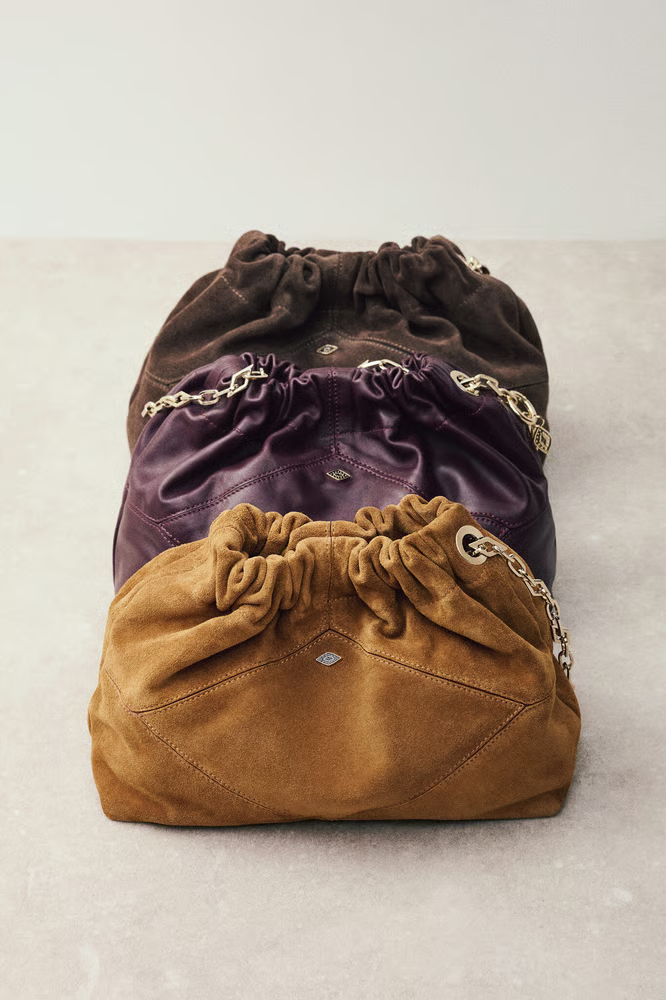
Hélène D’Auriac: The Youyou bag immediately struck a chord. The response was unexpected because we priced it slightly higher than our usual range, which hovers around 395 euros. This one is priced at 450 euros. Over the past two years, we’ve had two notable successful launches.
FNW: Could you elaborate?
HDA: Last year, the June Tote gained traction right from its launch. We found ourselves restocking weekly, approximately twenty times to meet demand. With the Youyou, it was gratifying to step into this new price range. This aligns with the luxury sector’s current challenges. Consumers are seeking value, especially as a few luxury brands have inadvertently distanced themselves from customer expectations. They are discerning and knowledgeable about sourcing and materials… This perspective allowed us to engage fresh audiences, as we’re beginning to establish a reputation in the leather goods space for our craftsmanship. This helped amplify our successes.
FNW: You have an extensive background in the high-end segment. What was the challenge in transitioning to a premium ready-to-wear brand?
HDA: I specialize in luxury accessories. Joining Ba&sh seven years ago was unique because L Catterton was a stakeholder at that time; a luxury culture was already woven into the fabric of the brand, yet the accessories category hadn’t been fully developed. My career gave me insights into emerging hit-bags. At Ba&sh, we needed to inject luxury expertise, new sourcing methods, and fresh design talent. It was essential to cultivate an accessories mindset within a brand steeped in ready-to-wear culture
FNW: How did integrating these skills impact your approach?
HDA: It allowed us to curate a premium offering made in Europe with Italian leathers, while also incorporating responsible standards like the Leather Working Group label. Barbara and Sharon empowered me to explore this new realm creatively. They put their trust in me to adapt timelines, methods, and sourcing, which differ considerably from ready-to-wear. I immersed myself in Ba&sh’s DNA to grasp its aesthetic, materials, craftsmanship, and effortless allure, identifying what constitutes the brand’s essence and applying it effectively to the new handbag category.
They previously had products on the rise, but our goal was to genuinely grow the leather goods segment. Our success hinges on authenticity, delivering a luxe range coupled with an attractive price-to-quality ratio. We fit within the affordable luxury segment, aiming to offer exceptional quality at a fraction of competitors’ prices. Upon my arrival seven years ago, we’ve experienced double-digit growth annually within this category.
FNW: With the impressive momentum from the last two years, is there a formula for creating a successful bag?
HDA: That’s a question that haunts many of us. Crafting a hit-bag begins with design, prioritizing timelessness. Next is consistency in messaging, aligning the proposition with marketing, merchandising, and digital strategies, and then maintaining course rather than questioning everything in light of sales fluctuations. We observe luxury brands making a favorable return to iconic styles.
FNW: How do you leverage this success? How can you extend it to other products?
HDA: After establishing a bestseller, broadening the range of materials and signature details is essential. The leather goods sector is witnessing robust growth, and our entire accessory range, especially jewellery, is progressing remarkably. We’ve utilized the same commitment to craftsmanship, employing recycled silver and innovative designs, which has spurred exceptional growth. However, focusing back on bags, the query post-hit-bag is how to morph it into an icon.
“Brands that have succeeded in turning their leather goods into icons have an advantage when it comes to withstanding crises.”
FNW: What defines this distinction?
HDA: It’s not strictly about volume. In this industry, if a bag endures for more than a year, it can already be seen as a hit-bag. For luxury brands, true icons span decades—some even 20, 30, or 40 years. In accessible luxury, the timeframe is more condensed, so I’d suggest a bag becomes iconic after three to five years on the market. However, we aspire to achieve the longevity of premium brands from the 80s and 90s, which have maintained icons for over 20 years. This emphasis is crucial, as brands that successfully establish their leather goods as icons gain a significant edge during recurring industry challenges.
FNW: You have recently promoted a new version of the June Tote. It resembles the original bag…
HDA: It maintains the same silhouette but comes in a smaller size. This enhances the model’s visibility, and we’re also exploring additional formats. We’re advancing in color choices and material variations, alongside image-centric features like embroidery, stones, or fringes reflecting our brand essence, with new designs set for launch in January. Smaller formats generally attract a younger crowd, and expanding on details enables us to appeal to a more sophisticated audience. These various iterations create a cohesive narrative around the model.

FNW: In practical terms, how many bag models do you currently offer? Are they all active in the market simultaneously?
HDA: We exercise care not to dilute our messaging to maintain momentum around our key products. We currently showcase three primary product families, each available in various formats, styles, and colors. There’s the June Tote, launched a year ago. The Youyou, launched in September, caters to our ready-to-wear customers. Next is the Swing, a satchel adorned with fringes that is seasonal but aligns with our aesthetic. Additionally, we have a fourth family of purely seasonal products lasting six months that taps into current trends, catering to our style-savvy and youthful clientele. However, the bulk of our sales stem from our leading two models. This trend is fueled by the consumer perception that investing in a bag is worthwhile, prompting them to gravitate towards our most iconic models. A pleasant surprise has been witnessing two models performing remarkably well concurrently.
A new phase in consumption
FNW: Notably, you’re not alone in thriving within this category. What fuels this dynamic?
HDA: Currently, our accessories category constitutes 11% of sales, with a goal of reaching 15% in the next three years. We’re gearing up for growth, and I believe our blend of creativity, exquisite materials, and high-quality finishes works to our advantage. Furthermore, we’re witnessing a surge in “new luxury” brands that combine top-tier offerings with retail experiences that align with historic luxury brands’ price standings. We’re transitioning into an era where consumers seek exceptional quality while remaining price-conscious. Our commitment to European manufacturing combined with our retail expertise meets our customers’ expectations, as they now look to accessible luxury brands for innovative designs that were once exclusive to high-end luxury.

FNW: You mentioned a cohesive storytelling that brings models to life for consumers. How do you achieve this?
HDA: For accessories, key moments play a significant role. We just navigated the back-to-school season, a time when accessory-focused September issues are prevalent. This is an ideal opportunity to launch fresh products, similar to our Youyou launch. The second notable moment is the year-end sales spike in December, during which our sales can double compared to other months. Therefore, we implement distinct strategies: introducing newness early in the season, focusing on bestsellers in December, along with launching new colors and materials. This necessitates activations, like a pop-up at Galeries Lafayette this month, collaborating with influencers who genuinely appreciate our brand, and launching an impactful image campaign towards year-end. These diverse strategies help us cater to various customer profiles. Interestingly, we found that 40% of June Tote buyers were new customers, and 25% were under the age of 35. This effort enables us to engage with a younger demographic.
FNW: Given this growth, do you have any plans for new launches in 2026?
HDA: We’re attempting to temper our pace, though we have numerous ideas and projects brewing. We sense potential around enhancing the brand identity, particularly in evening offerings and more accessible textile totes. It’s important for us to provide a unique proposition. Our jewelry expertise could also influence a sandal line or evening collection. Ba&sh is on a journey towards becoming a genuine lifestyle label, exploring a fresh approach to well-being. We’re collaborating with our ready-to-wear teams to assemble complete silhouettes for yoga retreats, as well as creating Coachella-themed products, featuring clutches tailored for festival-goers. This exploration into multiple new terrains is an exhilarating endeavor.