












Across fashion, music, entertainment, the Thai multimedia artist explores what happens when the commercial world recedes and the subject comes closer
There is a particular moment on a fashion set when the clothes stop being clothes. Someone puts on a jacket, turns a shoulder, changes their posture, and suddenly the garment has an attitude. Add a location, a face, a little tension, the right light, and something that looked perfectly ordinary on a hanger begins telling a completely different story. It is a moment that fascinates Kathryn Huang. The Thai multimedia artist has spent the past several years moving through New York’s overlapping worlds of fashion, music, performance, and entertainment. Photography remains at the center, but styling, movement, and art direction have increasingly entered the picture, broadening the possibilities of what can happen in front of her camera, both in still and moving imagery.
Huang has created imagery for Vinn Patararin, Laurel Blue, Thistle and Spire, and Satya Jewelry, and has even worked as a stylist for music industry stars Jai’Len Josey and Lady Stout. The aesthetics shift considerably from one project to another, which is precisely the point. She is not developing a formula that can be placed over every subject or collection. Color can push an image in one direction, texture can take it somewhere else, and a silhouette can completely alter the shape and attitude of the person inside the frame. Huang’s fascination with fashion and self-presentation also runs through the personalities she has photographed, from North Carolina rapper TiaCorine to ballroom star and Beyoncé Renaissance tour dancer Honey Balenciaga to world-touring DJ and producer Gia Fu. Each brings a distinctive visual language to the camera, making the resulting image less about imposing an aesthetic and more about the exchange between Huang’s eye and the world her subject already inhabits.
Through MATTE Projects, Huang has experienced image-making on a much larger scale. The New York creative agency works across fashion, music, and entertainment, placing her within productions ranging from the Marc Jacobs Autumn/Winter 2025 runway show to Netflix’s Squid Game Season 3 activation and Apple Music and Cardi B’s Am I the Drama? album launch. These projects may occupy different corners of popular culture, but visually their worlds increasingly overlap. Fashion borrows from music and performance, entertainment absorbs the language of fashion, and the images surrounding all of them are shaped by styling, movement, video, and art direction.
Working inside that overlap has allowed Huang to build a visual vocabulary that draws freely from different disciplines. Fashion has sharpened her attention to visual presentation, while music and performance bring movement, personality, and character into the frame. Larger productions have offered another perspective altogether, revealing how light, sound, staging, styling, and environment can work together to create an entire visual world. Huang’s movement into video and art direction has grown within this exchange, extending her attention beyond the individual photograph to the larger context in which an image is made.
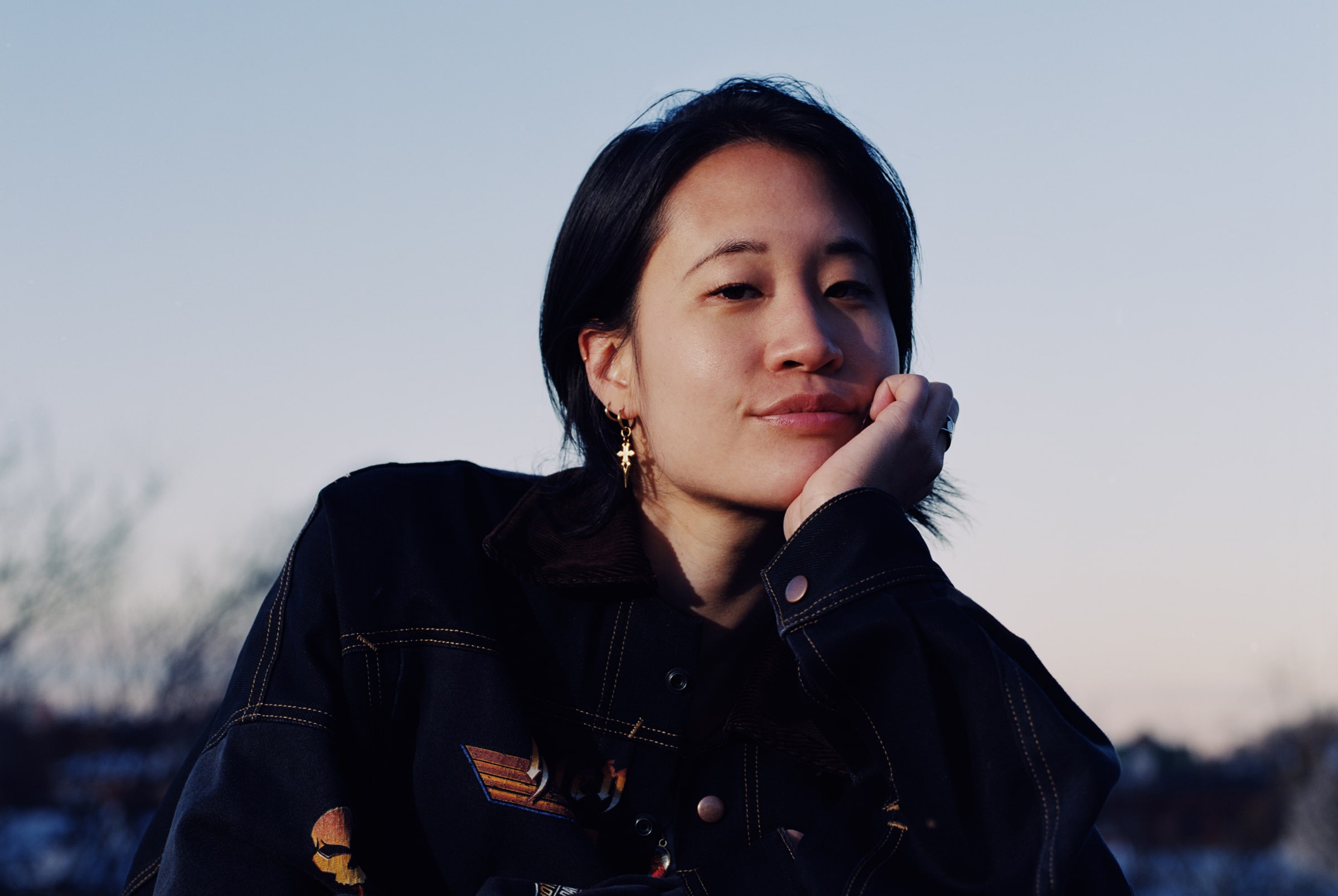
Increasingly, Huang is also bringing that experience into photographs made on a much more personal scale. She continues to shoot analog film, often turning her camera toward friends, artists, performers, and people within the creative communities she knows personally. The visual awareness developed through her professional work remains present, but the emphasis changes. There is less production surrounding the photograph and more room for the individuality of the person in front of her.
That closeness matters to Huang. She has spoken about the pleasure of photographing friends and people she loves, and about the possibility of helping someone recognize something beautiful, powerful, or unexpected in themselves. She is equally conscious of not becoming an outsider “shooting in” when photographing communities to which she is personally connected. Familiarity alters the encounter. Trust does not have to be created for the duration of a shoot, and the photograph can emerge from a relationship that existed long before the camera appeared.
Analog film lends itself naturally to that intimacy. Huang is drawn to its physical qualities: the weight of the camera, the sound of the shutter, the energy surrounding the moment, and the anticipation of waiting to discover what has been captured. There is no immediate image on a screen to interrupt the encounter or confirm that everything worked. A gesture can happen unexpectedly, an expression can arrive between poses, and neither photographer nor subject knows exactly which fraction of a second will ultimately survive on the roll.
This more personal work has also found a public life of its own. Huang’s analog photography has earned honors at the 1839 Awards and the Berlin Photo Awards, while her photographs have entered New York exhibition spaces including Culture Lab LIC and Agora Gallery in Manhattan’s art district, Chelsea. The recognition places these quieter images alongside a career that continues to move through the highly produced environments of contemporary fashion, music, and entertainment.
Huang is now directing projects of her own, several of which remain unreleased, but the evolution of her work is already visible in the photographs she is making. Moving between fashion, music, performance, and entertainment has made clothes, movement, personality, light, and atmosphere part of a visual vocabulary she can carry from one context to another. Her analog work takes those instincts somewhere more intimate. Among friends, artists, performers, and the communities she calls her own, there is less machinery surrounding the photograph and more space for the individual inside it.
Perhaps that is what makes this moment in Huang’s career particularly interesting. Her world is getting bigger, but her camera is moving closer. Film asks her to wait, people she knows invite a different kind of attention, and years spent moving through some of contemporary culture’s most constructed visual environments continue to inform the way she sees. Somewhere between the spectacle of a commercial set and the quiet click of an intimate shoot, Huang’s images are drawing closer to the people around her, without losing any of the visual energy that first made us look.