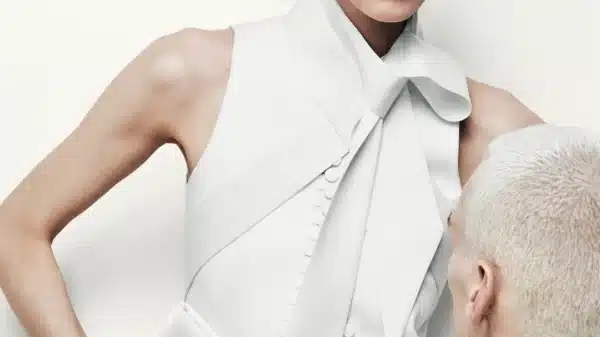

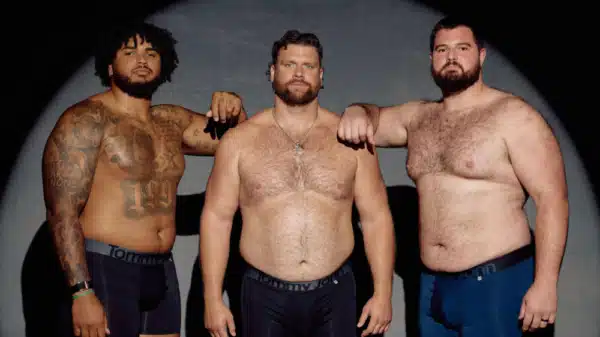

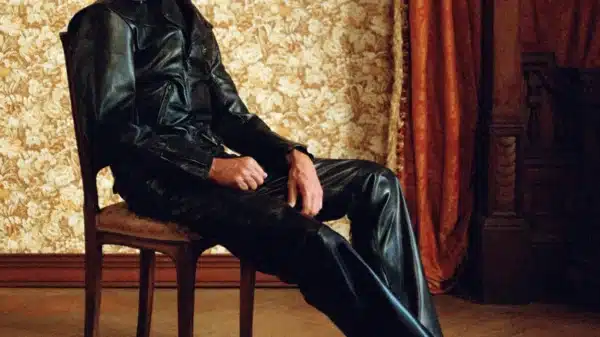











PARIS — “Junior” is the name that Duran Lantink has chosen for his debut collection as creative director of Jean Paul Gaultier, drawing inspiration from the sporty, affordable line Gaultier introduced in 1988 aimed at captivating a younger crowd.
Born in the same year, Lantink’s ties to the label extend far beyond this coincidence. His parents were part of a vibrant, trendy group that frequented the RoXY, a club in Amsterdam that also opened in 1988, and many of his earliest memories involve watching them and their friends dress up for outings.
“They were the kind of individuals you wouldn’t encounter in daytime settings; they blossomed in the nightlife and always inspired me. It felt like a community that didn’t quite exist in my elementary school or during my tennis, rugby, or ballet classes,” Lantink recalls. “When we got home, it was Friday night, filled with house music, catsuits, flamboyant party attire, and the iconic gold cone bras—so much in the Gaultier spirit. There was a figure named Johnny, whom I greeted as ‘Uncle Johnny’, and he’d reply, ‘It’s Auntie Johnny for you.’ This moment frightened me a bit but also made me recognize that labels like ‘uncle’ and ‘auntie’ could stretch beyond traditional definitions.”
It is this spirit of inclusivity and exploration that Lantink strives to embody in his inaugural collection for Gaultier. This marks a striking departure from the lineup of guest designers—think Chitose Abe, Glenn Martens, Simone Rocha—who have kept Gaultier’s legacy alive over the last four years. “It feels like a new heartbeat,” Lantink confirmed during a preview last week. To ensure a fresh perspective, he made the bold choice to steer clear of Gaultier’s renowned archive, saying, “I mean, I’m eager to dive into it, but I also think it’s better if I keep my distance for a while.”
However, Lantink admitted that maintaining this sense of innocence would be a challenge. “In our society, everyone knows who Gaultier is, but each person has a different viewpoint on his work. He tapped into many subcultures, from the bourgeois lady captivated by tailored pieces and sailor stripes to the youth celebrating Junior and club culture.” Lantink focused on the latter for his presentation this past Sunday.

One lesson we learned from Gaultier over the years is to always expect surprises. This is yet another reason why Lantink personifies the spirit of Gaultier. His show took place in the stunning Jean Nouvel-designed Musée du Quai Branly, known for its incredible collections of indigenous art and artifacts from diverse cultures, yet the audience was guided underground, passed magnificent displays and into a long, foreboding tunnel lined with metal ducts—an environment that screamed for high-energy techno. “I wish I had time, but I love raves,” Lantink shared. “When I was 15 or 16, I became deeply fascinated by Cyber Dog and the vibrant world of Japanese streetwear, alongside Walter Van Beirendonck. I started noticing people blending colors and patterns, creating exaggerated looks, and I thought, ‘That’s fantastic. Your body can become whatever you want it to be throughout your life.’ It’s this fascination that has significantly influenced my work as a designer.”
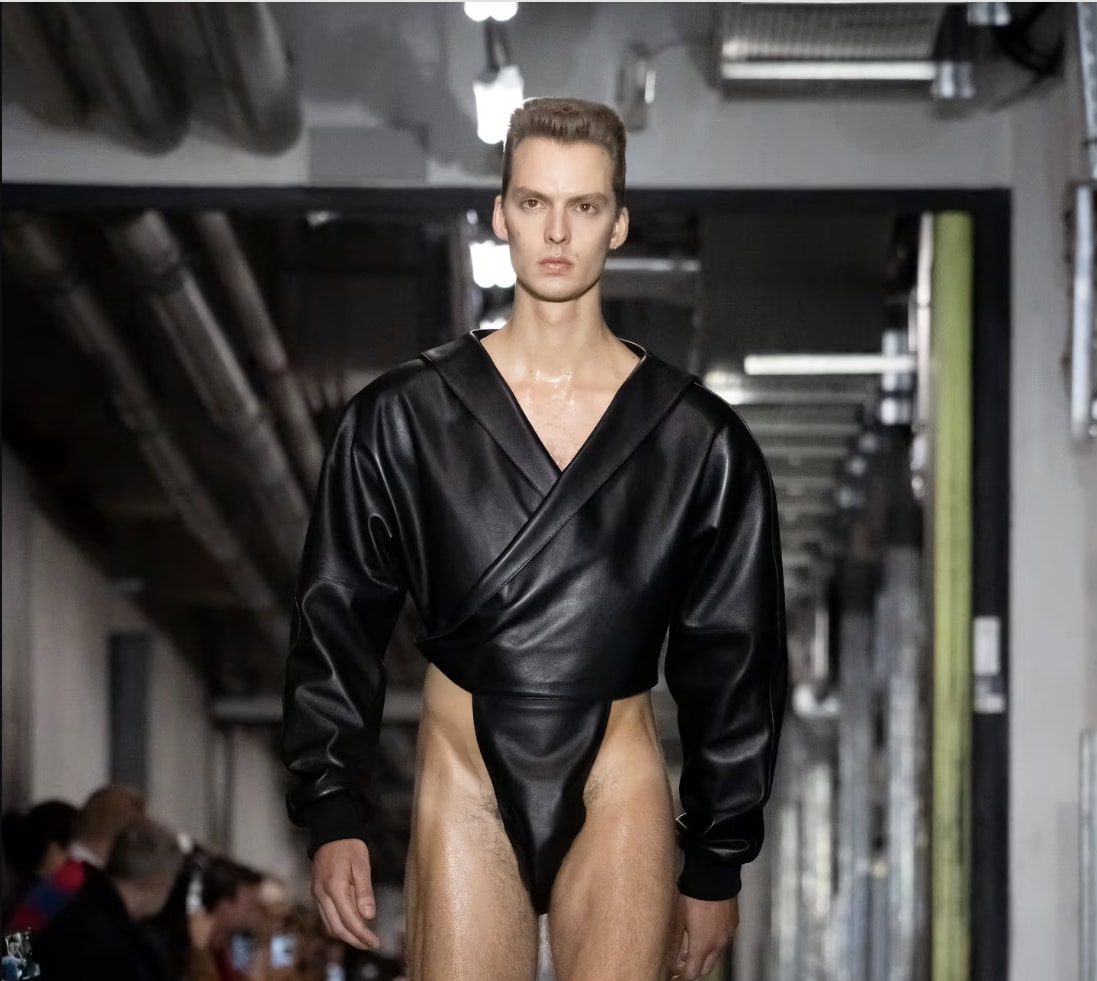
The hyper-exaggerated shapes in his own collections reflect Lantink’s mission to craft a vision of what humanity can be. He isn’t concerned with conventional standards, a sentiment he shares with Gaultier. This collection is a refinement of his own experiments. Gaultier famously played with silhouettes, none more iconic than Madonna’s cone bra. Its ubiquity made Lantink cautious, yet he felt compelled to pay homage to it by featuring his own interpretation, rounded and asymmetrical, at the start of his show. This was the ideal way to announce his presence. He then showcased Leon Dame in a black leather bomber jacket that morphed into a jockstrap, a fusion reminiscent of both a Colt Man and a superhero—an aesthetic Gaultier elevated with muscled models opening his shows back in the ’90s.


Gaultier was known for his fascination with the human body, using belts, straps, harnesses, and extreme tailoring to express this. However, Lantink’s innovative take on body consciousness feels fresher and deeply rooted in the euphoric, liberated culture of clubbing that influenced his youth. Silhouette designs include carved bodysuits, sculpted breastplates, bikinis, and cycling shorts, sharply cutting back to essential forms. One standout was a backpack that merged seamlessly with a wide, pocketed belt that wrapped down to the ankles. “I envision this guy going to an outdoor rave,” Lantink mused, “wearing nothing but a belt with pockets and a backpack on a 40-degree day, flaunting a pair of sunglasses. Who wouldn’t want to embrace the simplicity of just a belt at a rave?”
The collection featured varying levels of nudity and opportunities for shedding layers, culminating in a design showcasing a matte male form—hairy yet anatomically accurate—printed on a bodystocking. The captivating Lulu Tenney also donned one, though her modesty remained intact, thanks to a pair of flared shorts inspired by a trawlerman’s hat. “I can’t say I’m setting out to challenge norms,” Lantink reflected, “but I want to display what I find beautiful. Some may see that as confronting, yet it feels genuinely beautiful to me.”
As Lantink acknowledged, Gaultier’s influence is deeply embedded in his vision, whether through archives or not. Upon examining the Spring/Summer 1994 collection “Tatouage,” a tribute to tattoo culture and one of the most remarkable runway shows in history, his initial response was to create a new tattoo design. “But the concept fell flat. I realized there were elements we can incorporate without altering their essence. Only the techniques can change.” He introduced 3D printing, making tattoos come alive and tactile. This innovation stood out on a delicate bodystocking as one of the most striking fusions of Lantink’s and Gaultier’s aesthetics.


Among the designs were daisy jeans, a nod to Gaultier’s love for Deee-Lite, a group celebrated at the RoXY. The diagonally-printed Junior tops echoed his admiration for Russian Constructivism. There were statements featuring op art stripes and bomber jackets—qualities expected from Gaultier. Lantink even crafted a trench coat, cut to reveal that alluring midriff. The iconic pleated “Marilyn Monroe” dress served as a direct reference to a Junior advertisement, calling back to a time when audiences eagerly awaited Gaultier’s ads, which were always innovative.
Lantink also excelled in creating accessories like Gaultier’s sunglasses and shoes. The excitement was palpable when he finally had the budget to focus on these elements. However, he wisely preserved the classic men’s sandals designed for Gaultier by Stephane Kélian in 1988, recognizing that perfection should remain untouched.
Yet, this exploration is just a single piece in the story of Lantink stepping into the creative director role at Gaultier. He shared that they catch up for lunch about once a month. “We don’t focus much on fashion; our conversations lean more towards films, music, travel, and he often shares anecdotes about Pierre Cardin or Courrèges. Our chats are enjoyable but not necessarily on my projects.”
“It feels significant to weave these identities together,” Lantink reflected. “This moment in time is crucial. Themes from the late 80s and 90s shattered barriers for individuals like us. Now, it feels like we’re facing a push to relinquish that freedom.”