



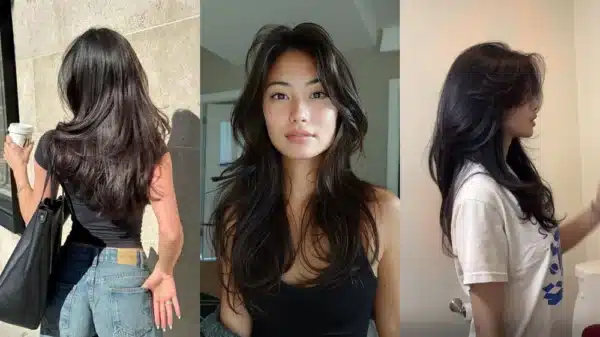










Men’s hair is changing again. After years dominated by skin fades, razor-sharp edges and cuts that looked as though they required a barber appointment every fortnight, longer hair is making a serious return. I grew up in Australia, the mullet was a force especially in AFL, ozzie rules.
And one man appears to be driving a remarkable amount of the interest: Jacob Elordi.
New search analysis supplied by beauty and wellness booking platform Fresha shows searches for “Jacob Elordi haircut” have risen 2,838% in a year, with around 2,000 searches recorded during the latest month analysed. Searches for “Jacob Elordi hair” were also reportedly up 349%, reaching around 6,000 searches for the month.
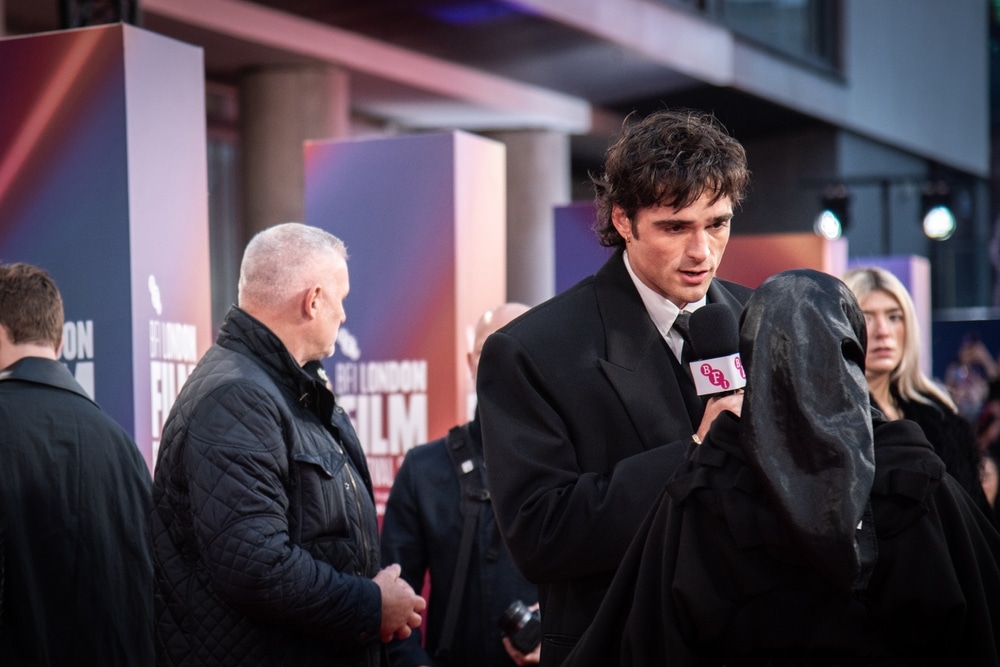
It makes sense. Elordi’s hair has become part of his style identity in much the same way as his relaxed tailoring, oversized coats and deliberately understated red-carpet dressing.
His current hairstyle sits somewhere between a 1970s shag, soft mullet and grown-out mod cut. His hairstylist Amy Komorowski has similarly described the look as textured and retro-influenced, designed to work with his natural wave rather than fight it.
Why Are Men Suddenly Growing Their Hair Again?
For years, men walked into barbershops asking for almost the same formula: short sides, fade, longer top.
It was practical. It photographed well. And unfortunately, after millions of identical variations, it also became predictable.
The Jacob Elordi haircut represents almost the complete opposite.
The edges are softer. The ears do not necessarily have to be completely exposed. There is movement at the back. The fringe can fall naturally across the forehead, and the hair does not look as though it has been frozen into position.
That imperfection is precisely why it feels contemporary.
Men increasingly want hair that looks good with tailoring one evening and a T-shirt the following morning. Elordi demonstrates how effective that approach can be. Even at major events, his hair frequently retains some wave and disorder rather than being slicked rigidly into place.
What Exactly Is the Jacob Elordi Haircut?
Do not walk into the barber and simply ask for a mullet.
That could end badly.
What you actually want is a medium-length, scissor-cut hairstyle with layered texture.
There should be noticeable length through the top and crown, while the sides remain soft rather than being aggressively clippered. The back can be allowed slightly more length, producing the hint of a mullet without turning the haircut into an exaggerated 1980s revival.
Recent versions worn by Elordi have incorporated a rounded shape, textured layers and greater length around the neck.
The important word is movement.
A barber should be creating a haircut that moves when you walk rather than one that remains perfectly fixed.
What Should You Tell Your Barber?
Take photographs.
Men still make the mistake of assuming hairstyle names are universal. One barber’s “textured shag” may be another barber’s “modern mullet”.
Images remove the confusion.
Then explain that you want to keep length through the fringe and crown, with enough hair for it to sweep backwards or fall naturally to either side.
According to the expert advice supplied by Fresha, men aiming for this style generally need around four to six inches through the top, although the precise length depends on hair density, texture and face shape.
The sides should preferably be scissor cut rather than faded extremely short.
Ask the barber to:
- keep length through the crown and fringe
- create subtle layers
- remove excess internal weight if your hair is thick
- maintain softness around the ears and temples
- avoid a harsh skin fade
- leave enough length at the back for natural movement
If you have extremely thick hair, removing internal weight becomes particularly important.
Without it, growing your hair longer can create the dreaded mushroom effect: huge at the sides, flat at the crown and completely resistant to styling.
Growing It Out Is the Difficult Part
Here is the problem nobody tells you about when photographs of celebrities convince you to grow your hair.
There will be an ugly stage.
If your current haircut is short, you cannot suddenly manufacture four or five inches of hair.
There may be two or three months when the sides start sticking out, the fringe refuses to cooperate and you seriously consider returning to the fade.
Resist.
The barber’s role during this period should be shaping rather than shortening.
You are growing towards a silhouette.
That means occasionally taking weight from areas that are becoming bulky while preserving the sections you actually need longer.
How To Style Jacob Elordi Hair
The greatest mistake would be using too much product.
Elordi’s hairstyle works because you can still see individual strands and natural texture.
Start with towel-dried rather than soaking-wet hair.
Apply either a small amount of sea-salt spray, lightweight styling cream or texture spray. Men with naturally dry hair should be careful with salt products, as excessive use can make longer hair feel brittle.
Then use your fingers.
Push the hair backwards and slightly away from the face while drying.
Forget about creating a perfectly straight parting.
In fact, perfection is your enemy here.
A hairdryer will help enormously, particularly if your hair naturally falls forward. Direct the airflow backwards from the roots so that you gradually train the hair to sit away from the forehead.
Once dry, work an extremely small amount of matte cream or paste through the mid-lengths and ends.
Not the roots.
Heavy wax sitting against the scalp can transform beautiful textured hair into something that looks greasy by lunchtime.
Straight Hair? You Can Still Wear It
You do not need Jacob Elordi’s natural wave.
Straight hair can produce an excellent version of the style, although your barber may need to create more texture through layering.
Try using sea-salt spray and gently twisting sections with your fingers while drying.
You are not attempting to create curls.
You simply want to prevent the hair falling like curtains.
A matte texture spray can also help straight hair retain some separation.
Thick Hair Is Probably the Easiest
Men with thick, slightly wavy hair have effectively won the lottery for this particular cut.
The natural density creates volume while the wave produces the movement.
The main challenge is bulk.
Your stylist needs to remove weight from inside the haircut without destroying its overall length.
Never ask somebody inexperienced to attack thick hair aggressively with thinning shears. Too much thinning can create hundreds of shorter strands that eventually produce frizz.
Fine Hair Requires More Care
Fine hair can still work, but excessive layering is dangerous.
Take too much weight away and suddenly there is nothing left to style.
Men with finer hair should retain slightly more structure and use lightweight volumising products rather than heavy pomades.
Dry shampoo can also provide subtle grip without making the hair greasy.
And avoid drowning the hair in conditioner.
Use it primarily through the lengths and ends rather than loading it directly onto the scalp.
Conditioner Is Now Part of Your Grooming Routine
Once men’s hair reaches this length, shampoo alone is no longer enough.
Longer hair rubs against collars, pillows, scarves and jackets. The ends become older, drier and more vulnerable to breakage.
Conditioner keeps the hair flexible and gives this haircut the softness it requires.
You may also notice that washing your hair every day becomes counterproductive.
For many men, washing every second or third day produces better texture.
Obviously this depends on your scalp, lifestyle and how oily your hair becomes.
How Often Should You Visit the Barber?
Growing your hair does not mean disappearing from the barber shop for six months.
Fresha’s expert recommends approximately six to eight weeks between tidy-ups.
The appointment is about preserving the architecture of the haircut rather than removing significant length.
The barber can tidy damaged ends, redistribute weight and prevent the back from becoming disproportionately long.
This is the difference between intentionally long hair and simply looking overdue for a haircut.
The Secret Is Not Copying Jacob Elordi Exactly
Celebrity haircuts regularly go wrong because men try to duplicate a photograph rather than adapting the idea.
Your hairline is different.
Your density is different.
Your face is different.
Your hair may be dead straight while Elordi’s naturally contains movement.
So treat his hairstyle as inspiration.
The most successful version may be slightly shorter at the back, longer through the fringe or less voluminous at the sides.
A good barber should make those adjustments.
The objective is not to leave the shop looking like somebody attempted to photocopy Jacob Elordi onto your head.
It is to capture the philosophy of the haircut: longer, softer, textured men’s hair that looks expensive without looking excessively groomed.
And perhaps that explains the extraordinary surge in searches.
After years of identical fades, men appear ready to let their hair move again.
Source: Fresha search analysis supplied to MenStyleFashion, based on Google search data analysed using Glimpse. Further hairstyle context from interviews with Jacob Elordi hairstylist Amy Komorowski.